Sudoku for complete beginners: you don’t need to be a genius
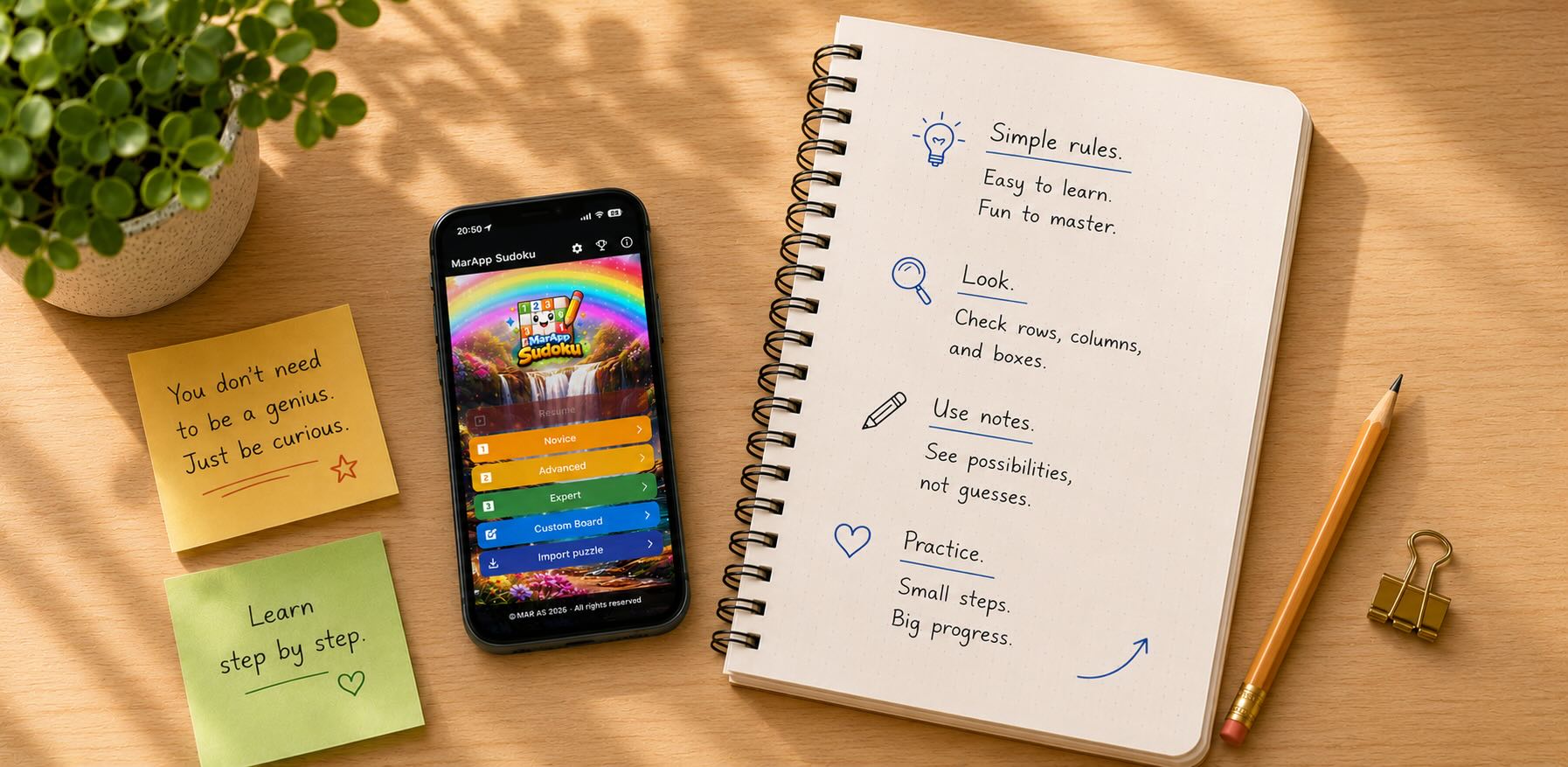
Sudoku may look intimidating at first, but it is not about being a genius or doing difficult math. It is about learning a few simple rules, spotting patterns, and taking one logical step at a time. This beginner guide shows you how to start.
Anyone can learn Sudoku – Young and old
Sudoku is not only for experts, fast thinkers, or people who already love puzzles. Almost anyone can learn the basic idea, including children, adults, and older beginners.
Many children can begin learning simple Sudoku-style puzzles from around age 6 or 7, especially with smaller grids or very easy puzzles. Standard 9×9 Sudoku is often easier from around age 8 or 9 and up, depending on the child’s patience, reading ability, and interest in logic games.
Adults and older players can start at any age. There is no point where it is “too late” to begin. Sudoku does not require speed or perfect memory. It rewards patience, attention, and practice — and those are skills you can build gradually.
Sudoku is logic, not math
Sudoku can look intimidating when you first see a 9×9 grid full of empty cells. But you do not need to be a genius to enjoy it.
Because Sudoku uses numbers, many beginners assume it is a math game. It is not. You never need to add, subtract, multiply, or calculate anything. The numbers from 1 to 9 are simply symbols that must be placed according to simple rules. A Sudoku puzzle would work in the same way with letters, colors, or shapes. What matters is not calculation, but placement: each number must fit in its row, column, and 3×3 box.
Sudoku is mostly about simple logic: looking at what is already placed and noticing what is missing. Once you understand the basic rules, the puzzle becomes much less mysterious.
Simple rules
A standard Sudoku puzzle has a 9×9 grid. The grid is divided into 9 rows, 9 columns, and 9 boxes (3×3 cells, usually separated with slightly thicker borders).
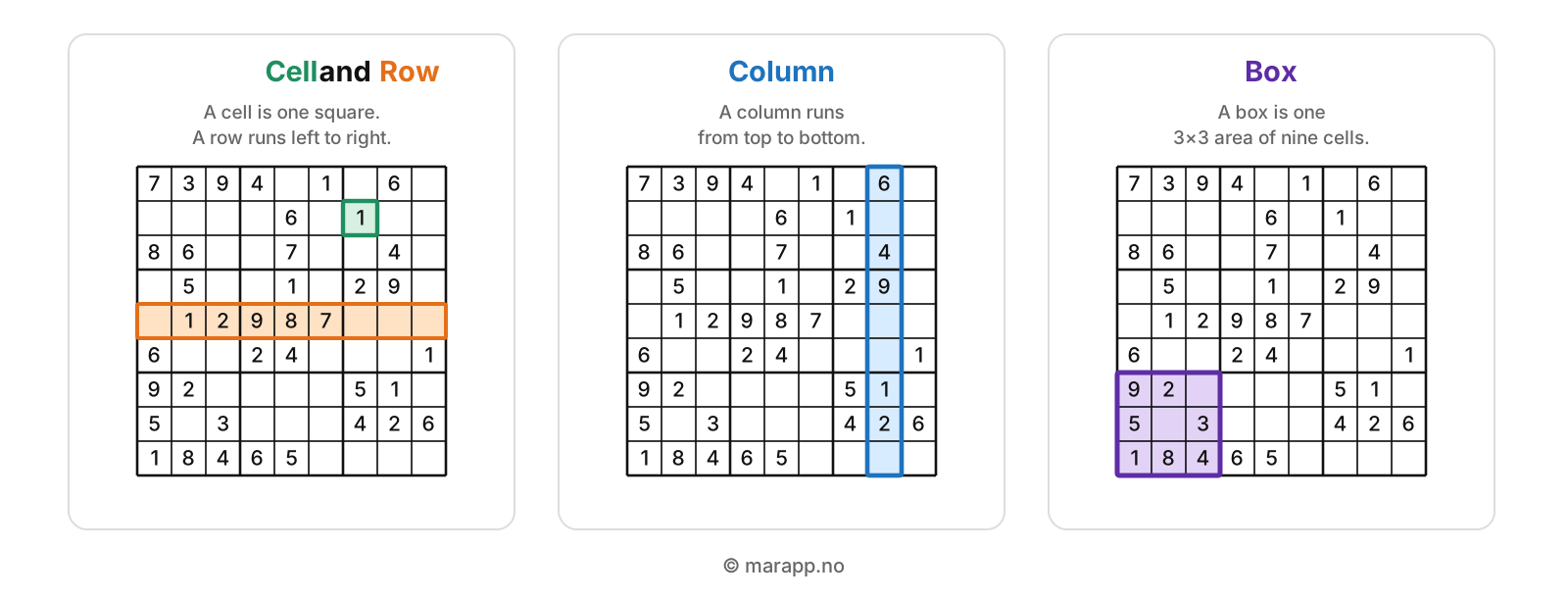
The game starts with initial numbers placed in some of the cells. Your goal is to fill every empty cell with a number from 1 to 9.
The rules are:
- Each row must contain the numbers 1 to 9 once.
- Each column must contain the numbers 1 to 9 once.
- Each 3×3 box must contain the numbers 1 to 9 once.
- No number can repeat in the same row, column, or box.
That’s all! That is the whole foundation of Sudoku. Every solving technique, from the easiest to the most advanced, is built on these rules.
Start with small steps, not the whole grid
Sudoku often feels difficult at first because there is so much to look at: rows, columns, boxes, and many empty cells. Instead of trying to understand the whole puzzle at once, focus on one small area at a time. Look at a row, column, or 3×3 box and ask simple questions: Which numbers are already there? Which numbers are missing? Is there only one place a number can go?
Small observations often lead to the next step. A box with only a few missing numbers, or a row with many filled cells, can be a good place to start. This is also why beginner-friendly puzzles are useful: they give you enough information to make progress without needing advanced techniques.
A simple way to start your first puzzle
If you are not sure where to begin, try this simple approach:
- Pick one 3×3 box.
- Look at which numbers are already present.
- Choose one missing number.
- Check the rows and columns connected to the empty cells.
- If only one cell can contain that number, place it.
- If more than one cell is possible, add notes and move on.
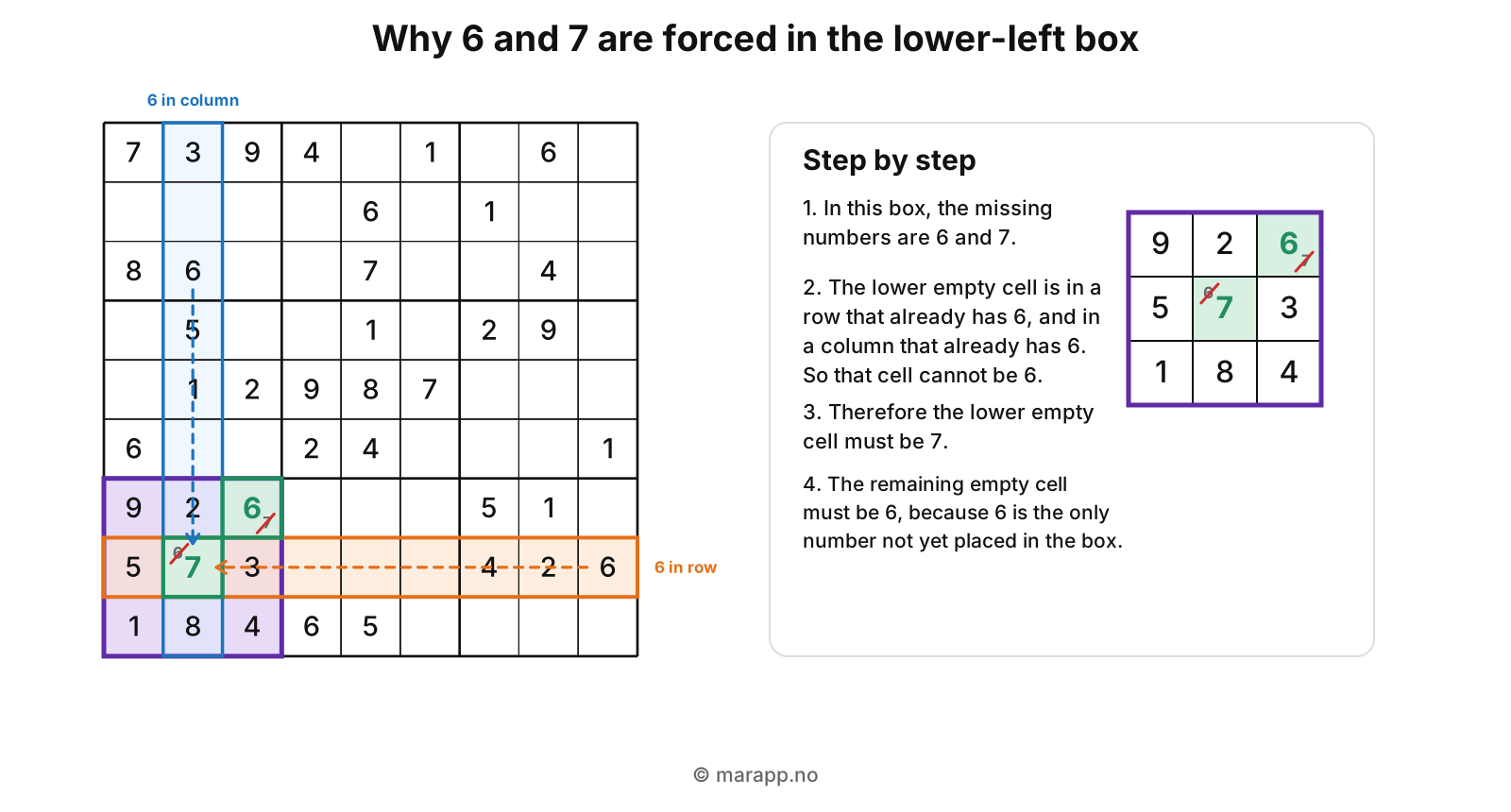
This method keeps the puzzle manageable. You are not trying to solve everything at once. You are simply collecting small pieces of information until the next step becomes clear.
Use notes without making a mess
Notes, also called candidates, are possible numbers for a cell. If a cell could be 2 or 7, you can mark both numbers as notes instead of guessing.
For beginners, notes are one of the most helpful tools in Sudoku. They let you keep track of possibilities while you wait for more information from the rest of the puzzle.
This is one area where an app can be especially helpful. Notes stay clean, readable, and easy to update. You can change your thinking without creating a messy grid.
Do not worry about being slow
Sudoku is not a race unless you want it to be. If you are new to the game, it is completely normal to spend a long time on one puzzle. Speed comes naturally with practice.
It is better to solve slowly and understand your moves than to rush and make random guesses. Each puzzle teaches you something, even if you get stuck.
Why Sudoku is easier to learn in an app
Learning Sudoku on paper can be enjoyable, but it also adds extra work. You have to write small notes neatly, erase them when they change, avoid smudges, and keep track of possible numbers by yourself.
A good Sudoku app, like MarApp Sudoku, can make the learning process easier by reducing that friction. It gives you a clean board, makes notes easier to manage, and lets you correct input mistakes without damaging the puzzle. And since it is always with you on your phone, you can practice whenever you have a quiet moment.
A good app can also help you notice beginner mistakes while you are still learning. For example, if you try to place a number that already exists in the same row, column, or 3×3 box, the app can warn you before that mistake spreads through the puzzle.
In MarApp Sudoku, this kind of help can be turned on or off in the settings. You can use it while you are learning, then turn it off later when you feel ready to take the training wheels off.
An app should not take the thinking away from you. The best experience is when the app supports your solving process while still letting you make the decisions.
Build confidence with easier puzzles first
There is no need to start with hard puzzles. Easy Sudoku puzzles are not “less real” than difficult ones. They are the best place to learn the rules, recognize patterns, and build confidence.
As you improve, you can gradually try puzzles that require more notes and more advanced techniques. But the foundation is always the same: one number, one cell, one logical step at a time.
Where to go next
If you are new to Sudoku, start with the rules, then learn how to use notes, and then move on to simple solving techniques such as Naked Singles and Hidden Singles.
MarApp Sudoku is designed to make this process calm and clear. You can start with easier puzzles, use notes when needed, and build confidence one step at a time. When you are ready, you can also use your solving time to track your progress or challenge others.
You do not need to be a genius to play Sudoku. You just need a good place to begin.